

Origins of the Alagoas Crisis: Before the Damage
Before the crisis, Braskem operated a long-established rock salt extraction business in Maceió, the capital of Alagoas.
The company used solution mining, injecting water into underground salt layers, dissolving them, and extracting brine for chlor-alkali production. This operation dates back to the 1970s and supplied key inputs like chlorine and caustic soda.
A critical risk, however, was structural:
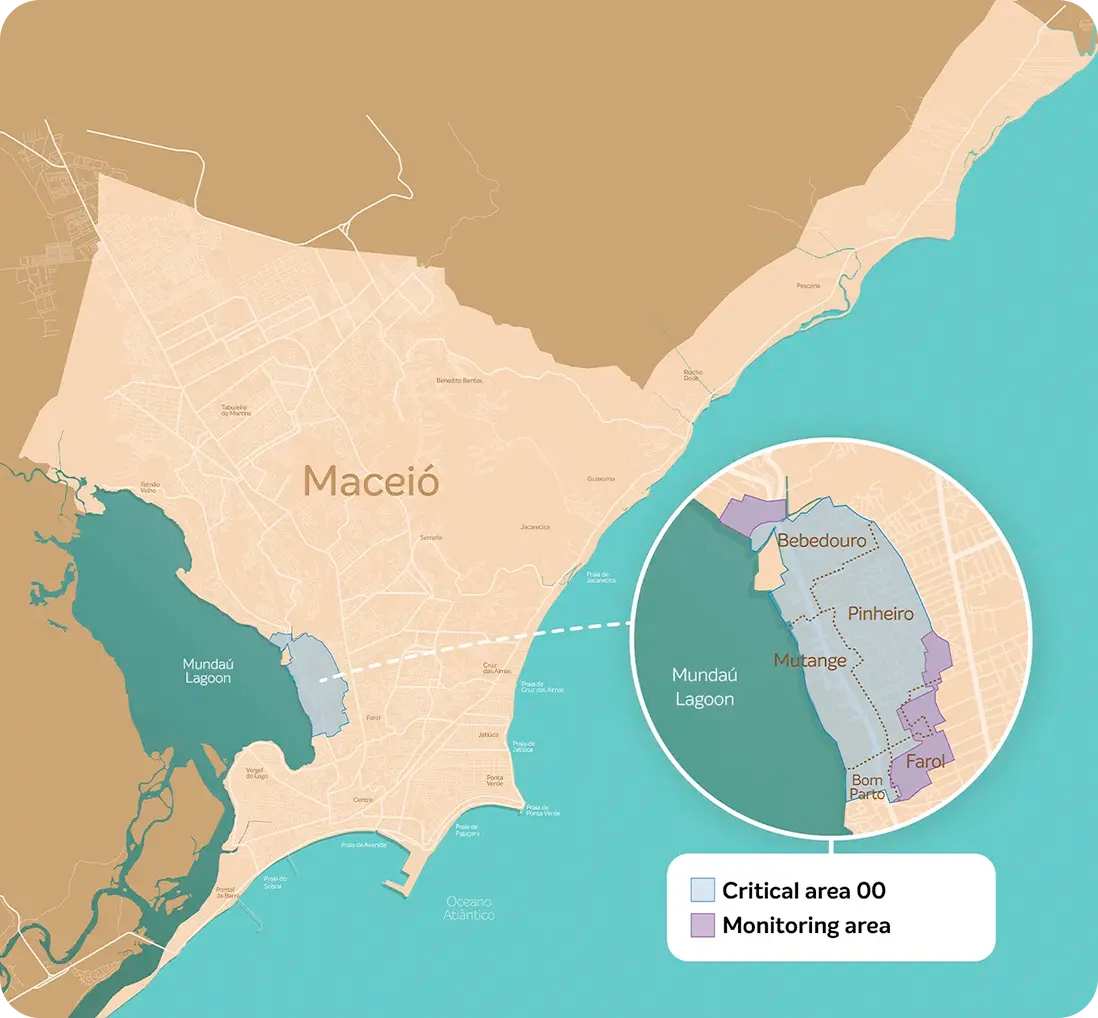
🟥 extraction was conducted directly beneath dense urban districts such as Pinheiro, Mutange, and Bebedouro.
For decades, no large-scale surface damage was formally identified.
What the Area Looked Like Before the Crisis
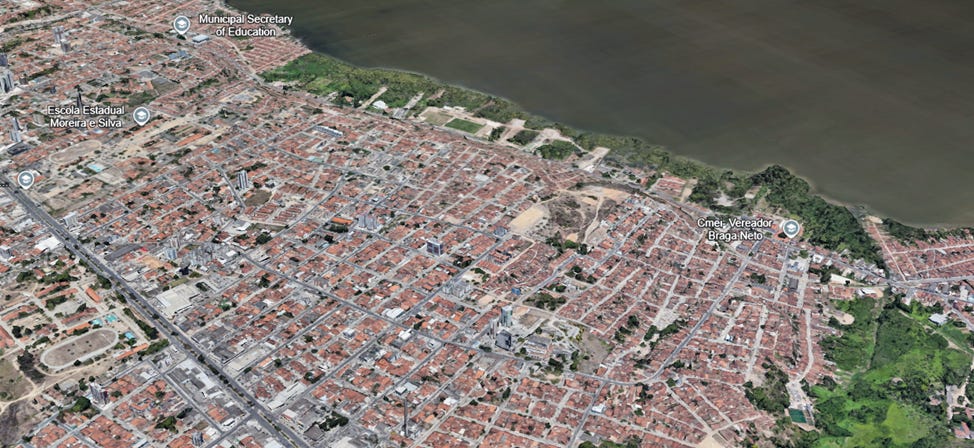
The image below shows a densely populated urban grid in Maceió, with fully developed residential neighborhoods, schools, and infrastructure located directly above Braskem’s mining areas.
Source: Google Earth
🟥 This is essential context: the crisis did not begin in a remote or industrial zone, but in a fully functioning city environment.
And now.
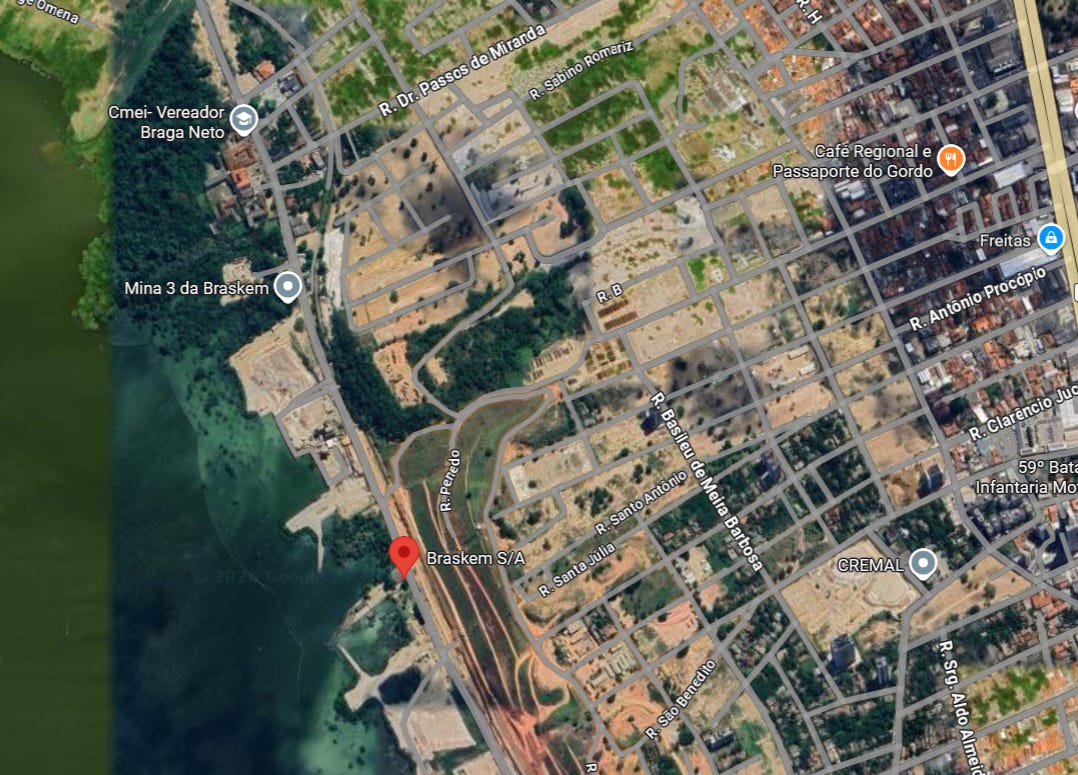
Source: Google Maps
The Trigger: 2018 Seismic Event
In March 2018, a low-magnitude earthquake (~2.5–2.7) marked the turning point.
Residents soon reported:
cracks in buildings
uneven floors
ground subsidence
road deformation
Investigations by CPRM linked the damage to instability in underground salt caverns created by Braskem.
Escalation and Attribution (2019–2020)
By 2019, the issue became a full-scale urban crisis.
CPRM confirmed that:
subsidence
structural damage
collapse risk
were directly tied to mining activity.
More than 14,500 properties were affected, forcing authorities to begin large-scale evacuations and pushing Braskem into negotiations.
Source: Braskem
Compensation Framework: How Braskem Structured Payments
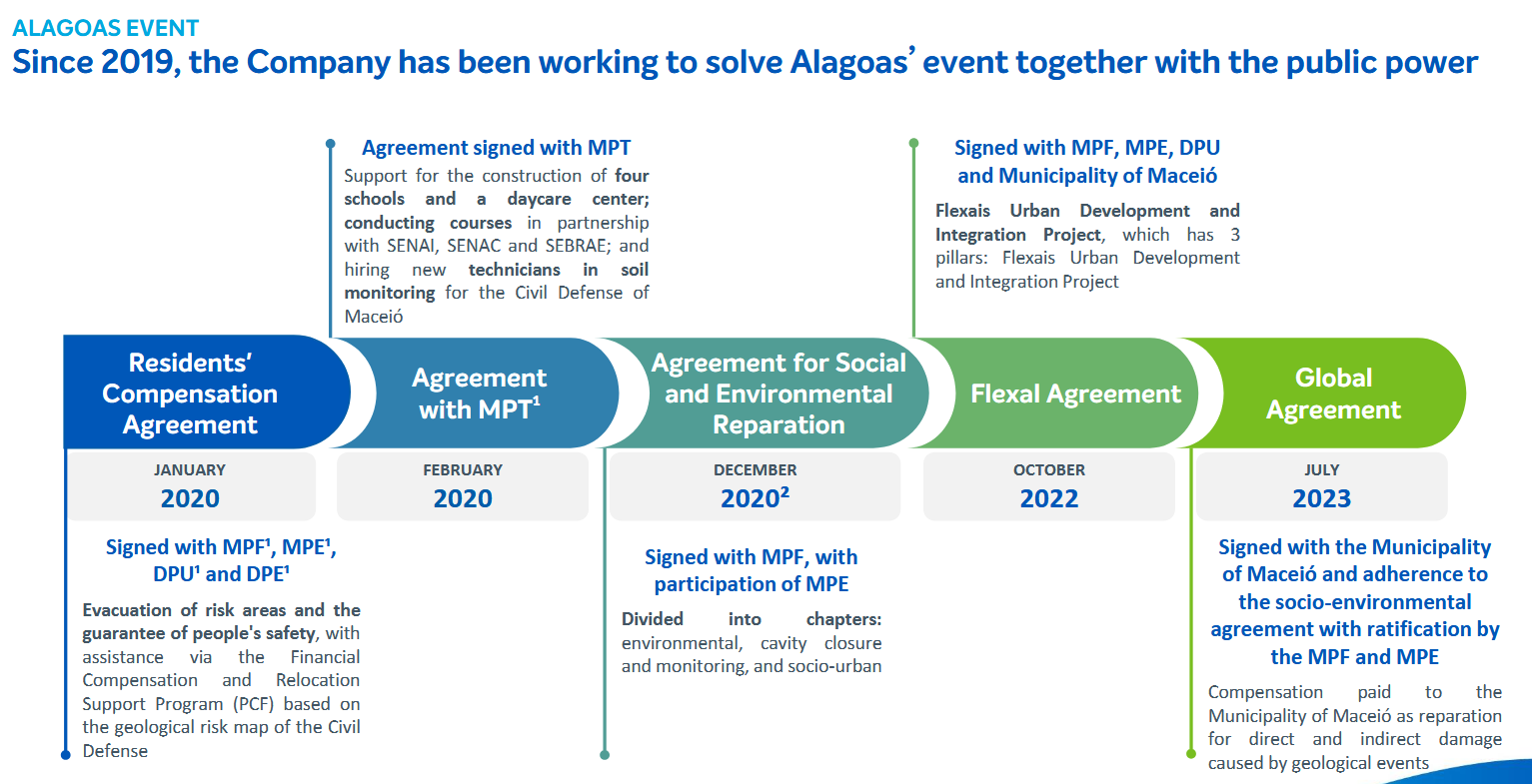
Rather than prolonged litigation, Braskem moved relatively quickly toward a comprehensive settlement model, which became one of the largest urban compensation programs in Brazil.
2019 Initial Agreement (Public Prosecutors + Authorities)
Braskem signed agreements with:
Ministério Público Federal
Ministério Público do Estado de Alagoas
This established the foundation for:
financial compensation
relocation programs
social mitigation measures
Source: Braskem
Scale of Execution (Q3 2025 Update)
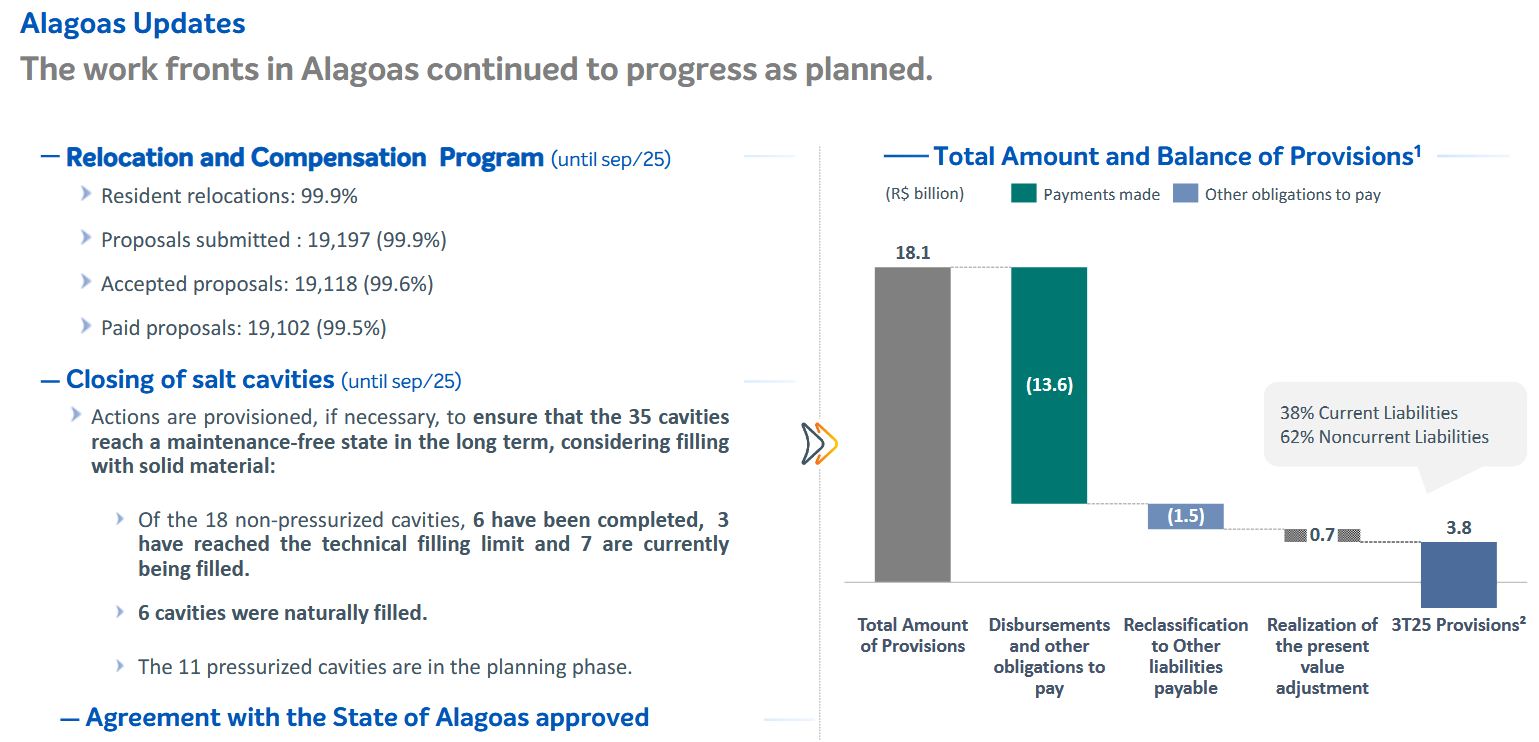
By the end of September 30, 2025, Braskem had effectively moved the Alagoas crisis into its final execution phase, with most operational and financial fronts largely completed.
Compensation & Relocation
The Financial Compensation and Relocation Support Program (PCF) is essentially complete:
99.9% (19,197) of proposals submitted
~99.5% already paid
🟥 This indicates that nearly all affected residents have been compensated and relocated, removing the largest source of uncertainty.
Cavern Closure Progress
The company continues to execute the technical closure of 35 salt caverns:
6 caverns fully filled with solid material
2 reached technical filling limits
5 currently in filling process
5 in preparation phase
6 caverns naturally filled (confirmed by ANM)
11 caverns remain pressurized for long-term closure strategy
🟥 Importantly, the process is now engineering-driven rather than crisis-driven, with a clear path toward a maintenance-free final state.
Financial Liabilities & Accounting Shift
At the end of Q3 2025:
Provision balance declined to R$ 3.8 billion (-19% QoQ)
However, this reduction is primarily accounting-driven, due to:
reclassification of obligations into “Other Payables”
reflecting execution (payments) rather than risk reduction
🟥 In other words, liabilities are being paid and scheduled, not expanding.
Source: Braskem
State Agreement: A Key Turning Point
On November 10, 2025, Braskem signed a landmark agreement with the State of Alagoas:
Total value: R$ 1.2 billion
R$ 139 million already paid
Remaining balance: 10 variable annual installments, mostly post-2030
Crucially:
🟥 The agreement provides full discharge from state-level damages, including:
property
non-property claims
and includes the termination of the state’s indemnification lawsuit (subject to judicial approval).
Current situation
This is Marcelo Braskem. This was 4 months ago, but now everything has been covered with sand and the road has been completed.
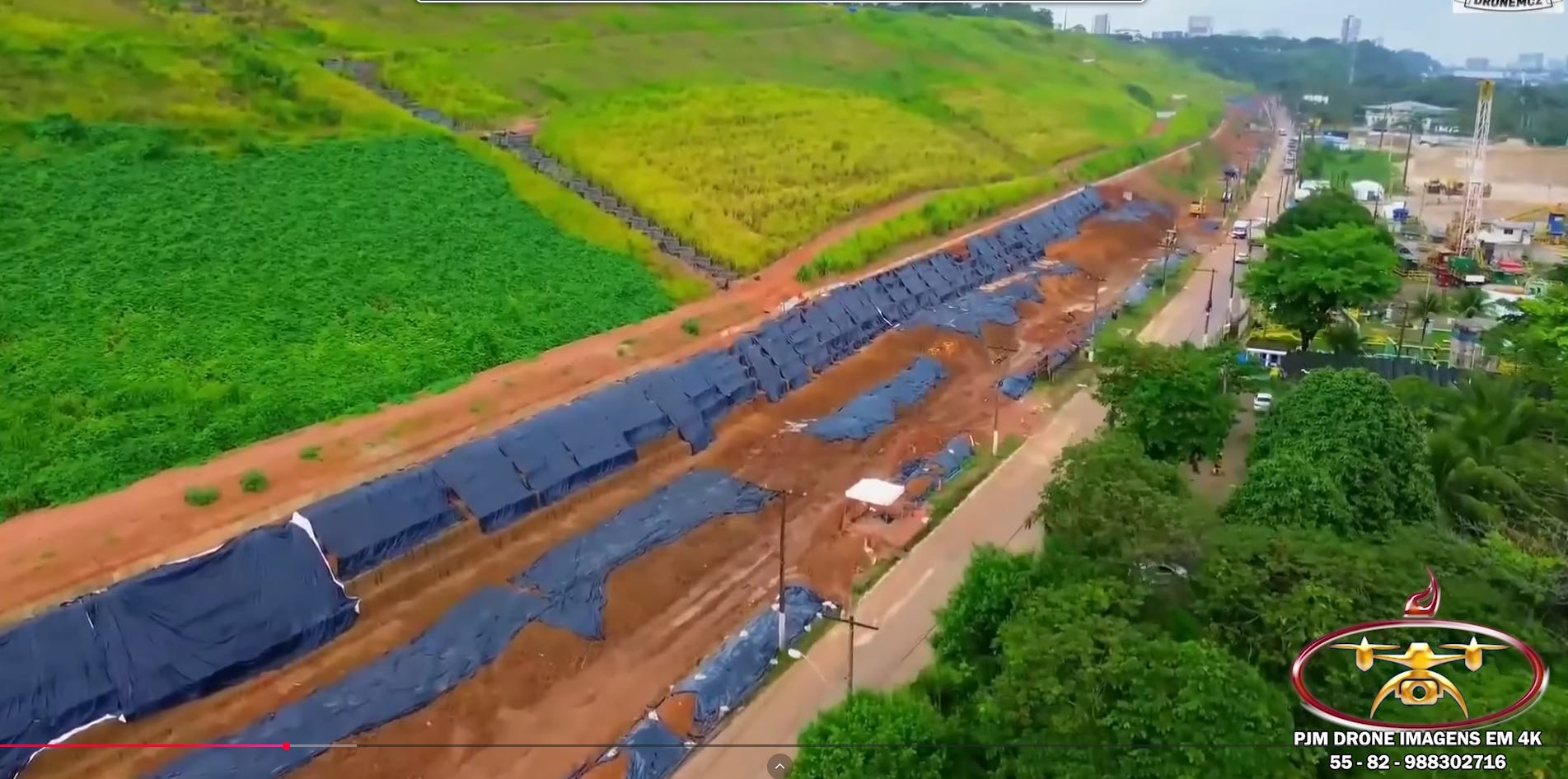
Source: PJM DRONE - IMAGENS AÉREAS EM 4K
And now.
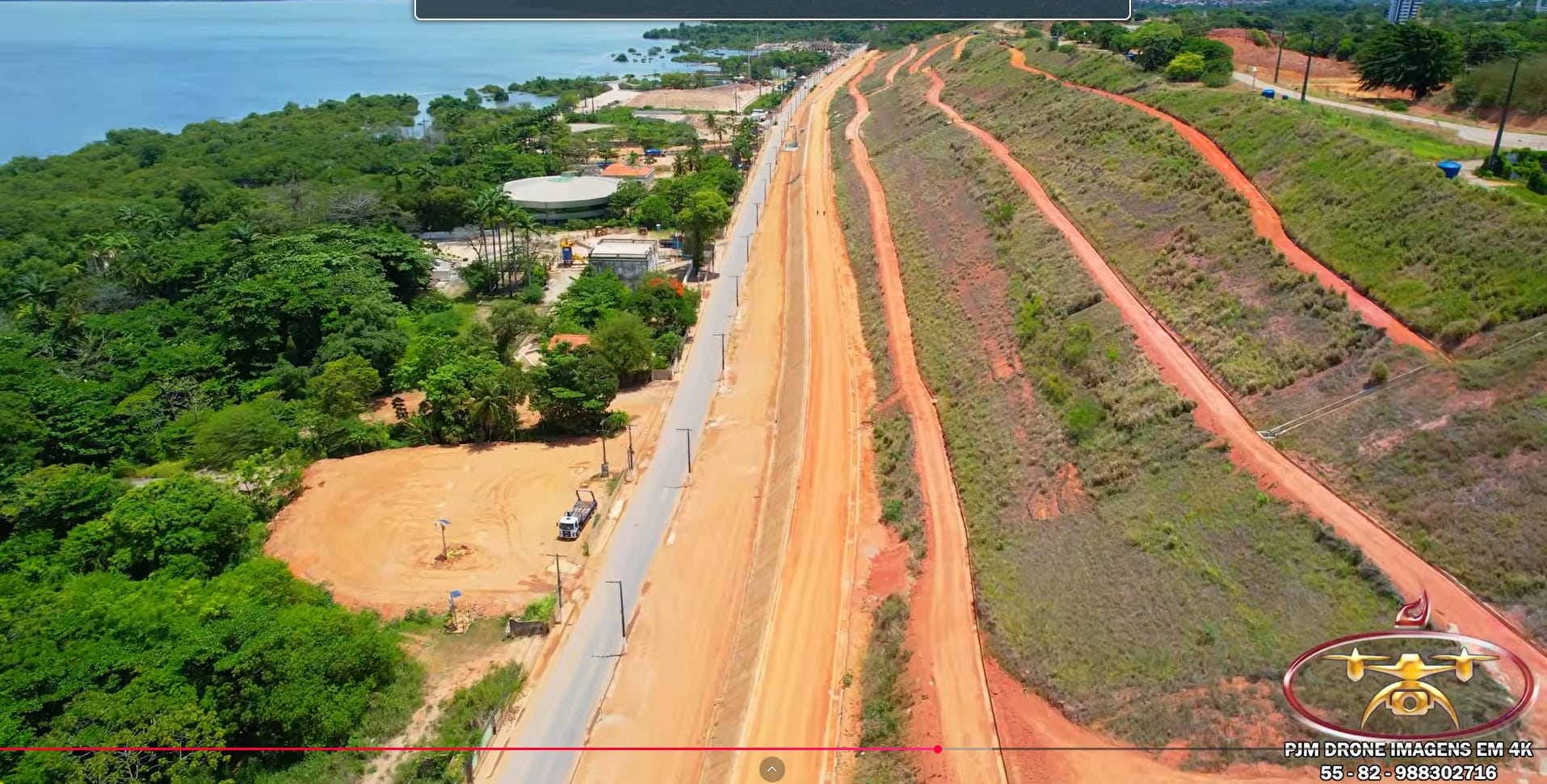
Source: PJM DRONE - IMAGENS AÉREAS EM 4K
Another angle.
4 months ago.
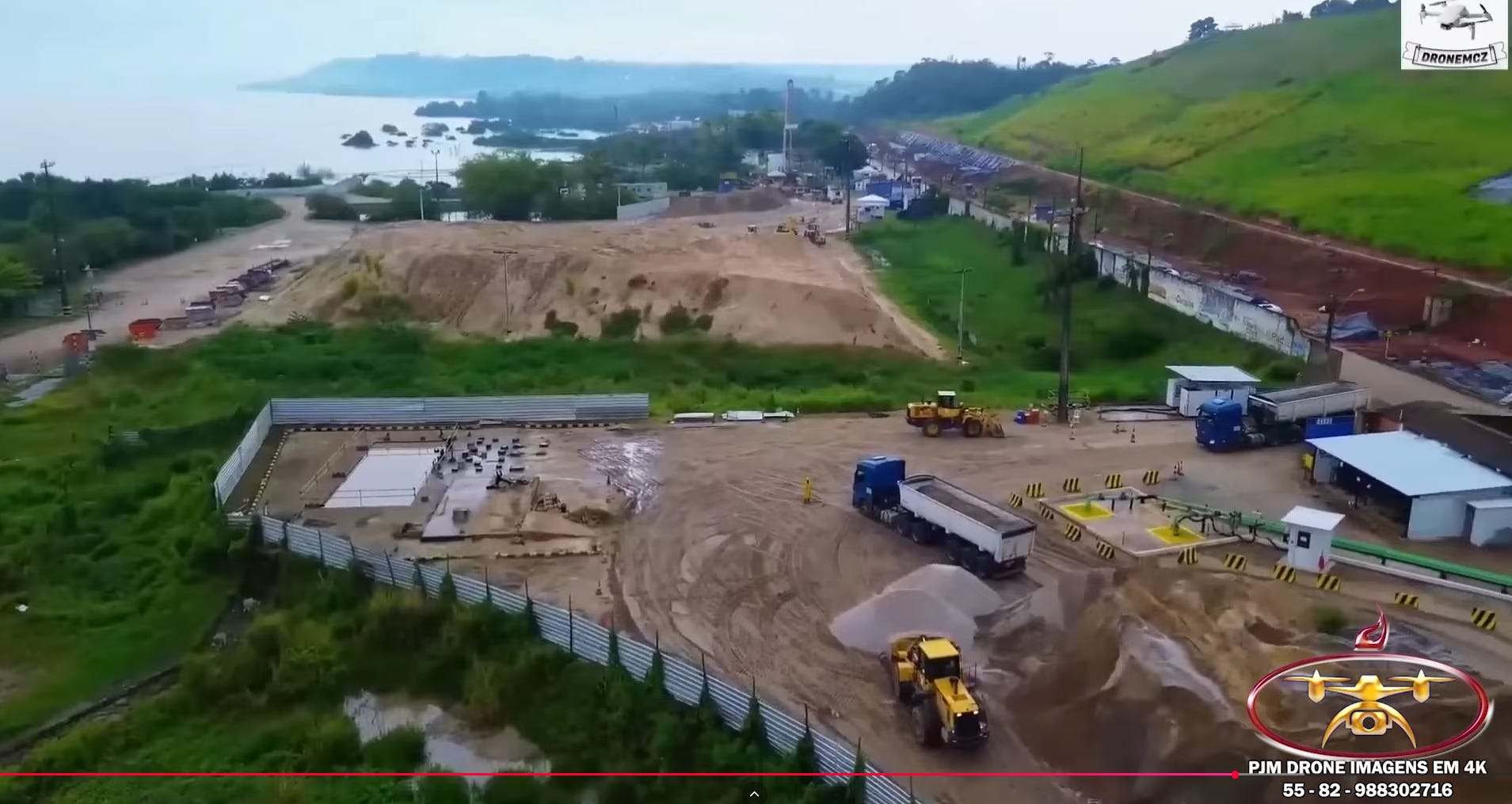
Source: PJM DRONE - IMAGENS AÉREAS EM 4K
And now.
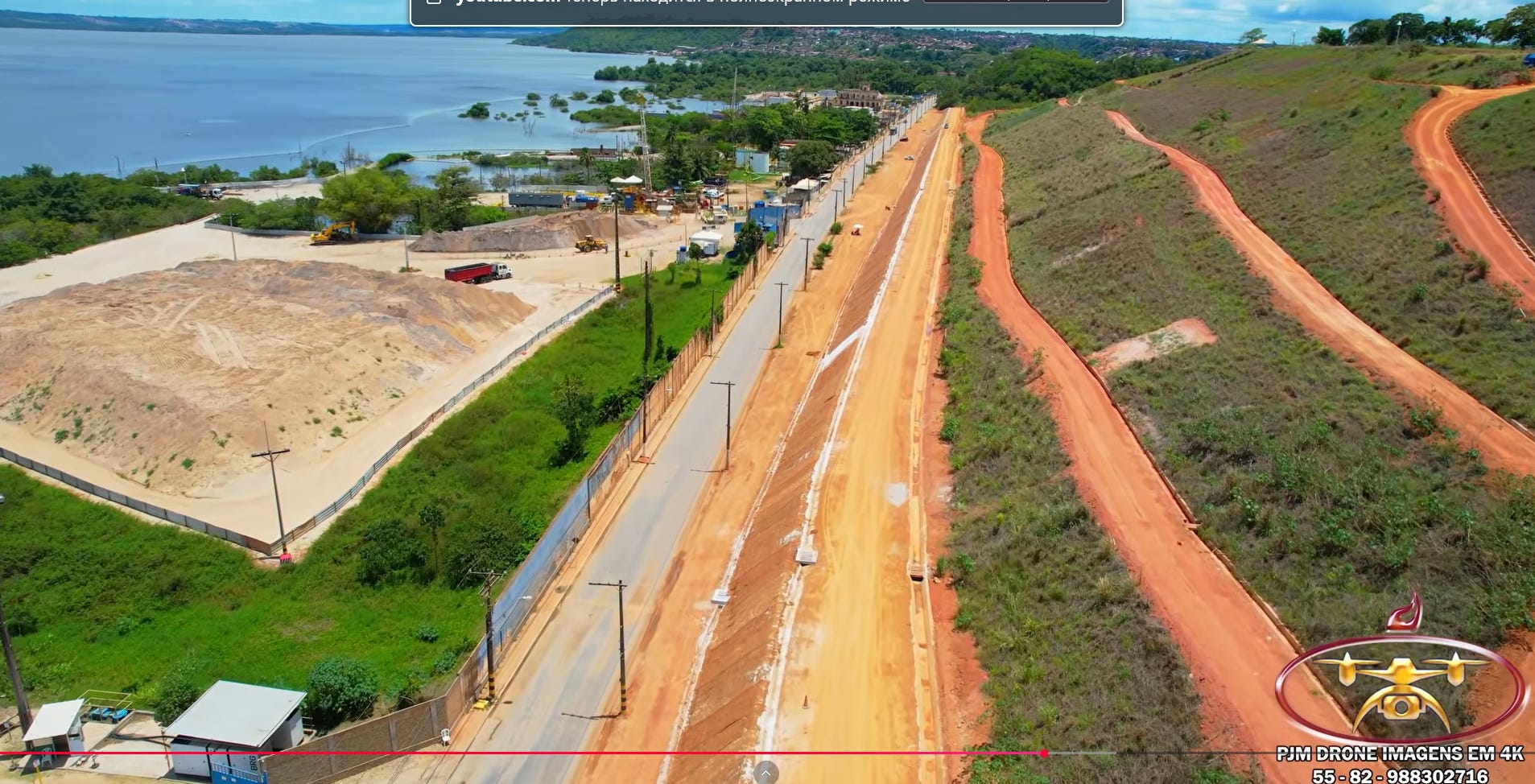
Source: PJM DRONE - IMAGENS AÉREAS EM 4K
Infrastructure Expansion in Bebedouro, Maceió
Significant earthworks are now underway near Braskem’s Bebedouro facilities, reflecting major stabilization of previously affected terrain.
But 4 months ago the situation was like this.
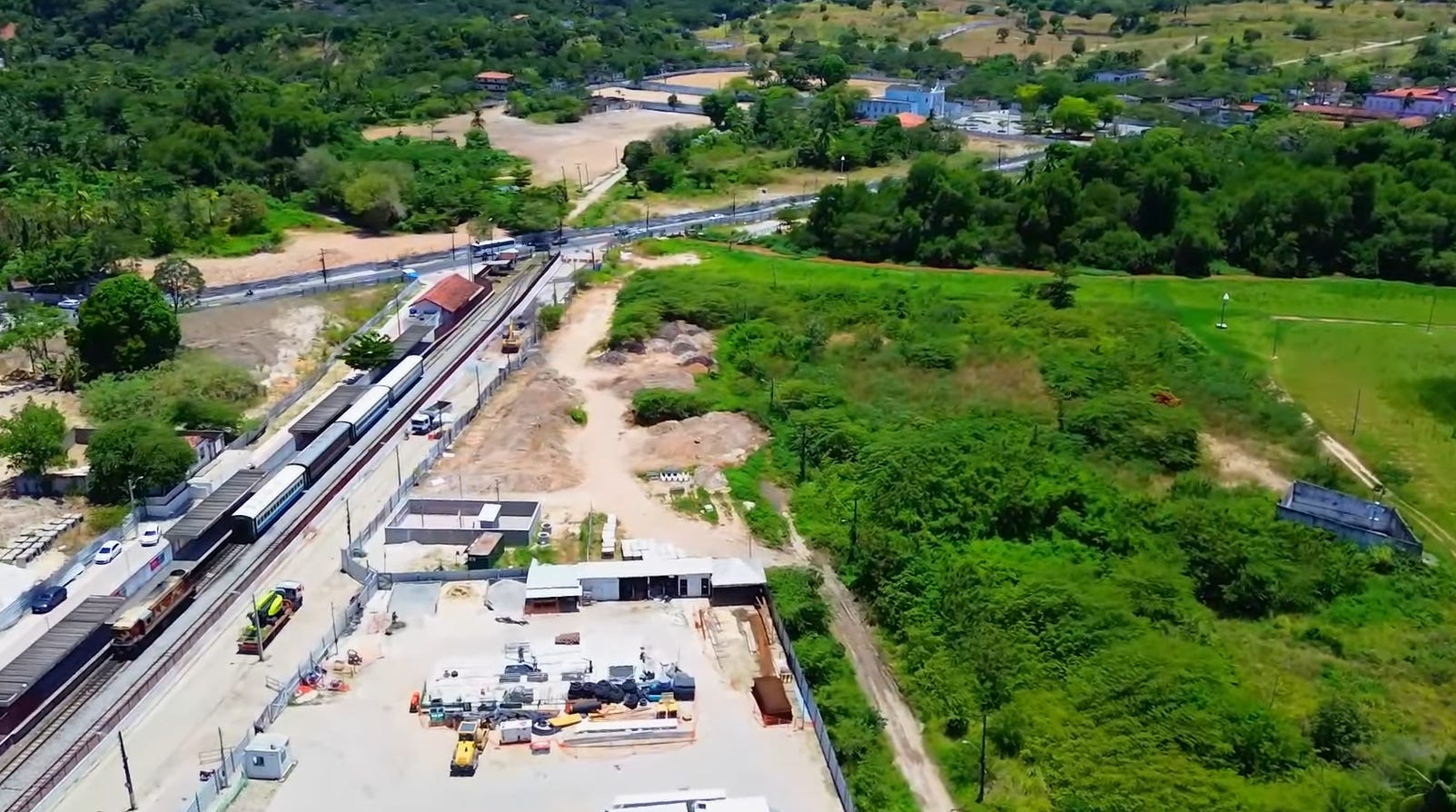
Source: PJM DRONE - IMAGENS AÉREAS EM 4K
Continue.
Heavy machinery is leveling ground, building embankments, and creating drainage channels, preparing the area for a new road interchange. The reinforced mounds and barriers protect infrastructure and isolate previously risky zones, while channels manage water to prevent further subsidence.
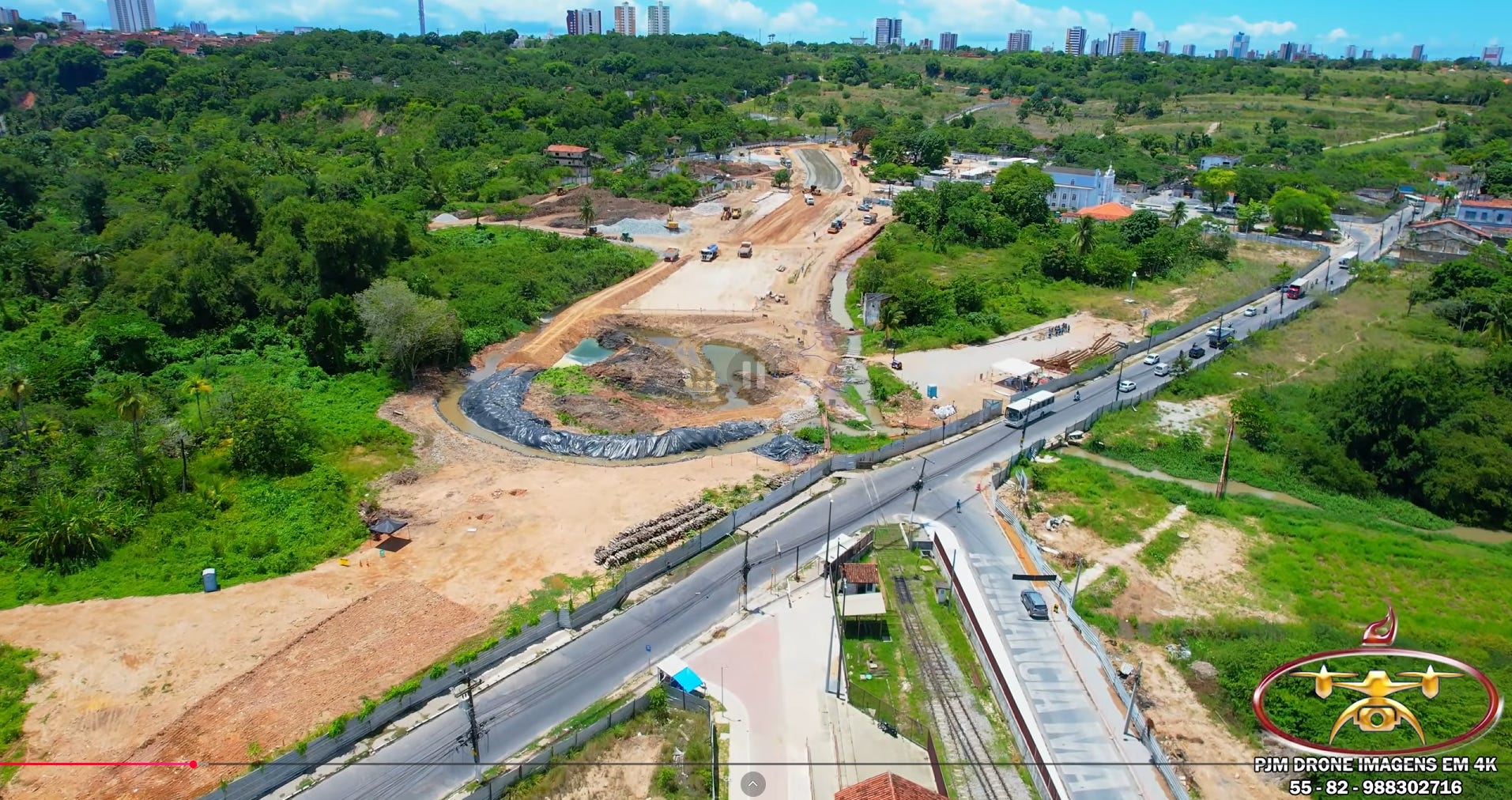
Source: PJM DRONE - IMAGENS AÉREAS EM 4K
These works are part of Braskem’s plan to permanently close the salt wells in Maceió. Rock salt extraction halted in May 2019, and the company has been implementing measures approved by the Brazilian National Mining Agency (ANM). Completion of the closure and associated stabilization is scheduled for mid-2026.
The active construction shows that the most critical phase of geological instability is behind, allowing Braskem to safely advance long-term infrastructure and regional development.
Takeaway
I genuinely believe the Braskem crisis in Alagoas is finally turning a corner. The complete halt of rock salt extraction in May 2019 and a structured, ANM‑approved plan to permanently close the 35 wells — with work due to finish by mid‑2026 — have been pivotal.
Most compensation claims have been worked through, and settlements have eased social and legal pressures. With soil stabilization and community agreements advancing, the acute phase of this crisis is winding down and debt and reputational risks are declining.
Disclaimer
The information provided in this publication is for informational and educational purposes only and should not be construed as financial, investment, legal, or tax advice. The views and opinions expressed are solely those of the author and are based on publicly available information believed to be reliable, but their accuracy and completeness cannot be guaranteed.
Nothing in this publication constitutes a recommendation, solicitation, or offer to buy or sell any securities, commodities, or financial instruments. Readers should conduct their own independent research and consult with a qualified financial advisor before making any investment decisions.
The author may hold positions in companies or assets mentioned in this publication and may change these positions at any time without notice. Past performance and historical trends are not reliable indicators of future results.
By reading this publication, you agree that the author and ALLKA Research shall not be held liable for any direct or indirect losses resulting from the use of the information contained herein.