
Naphtha Was Higher in 2022 — Yet Braskem Was Profitable

One detail that is often overlooked in discussions about the petrochemical cycle is the relationship between feedstock prices and polymer pricing. Recent market moves provide an interesting historical comparison.
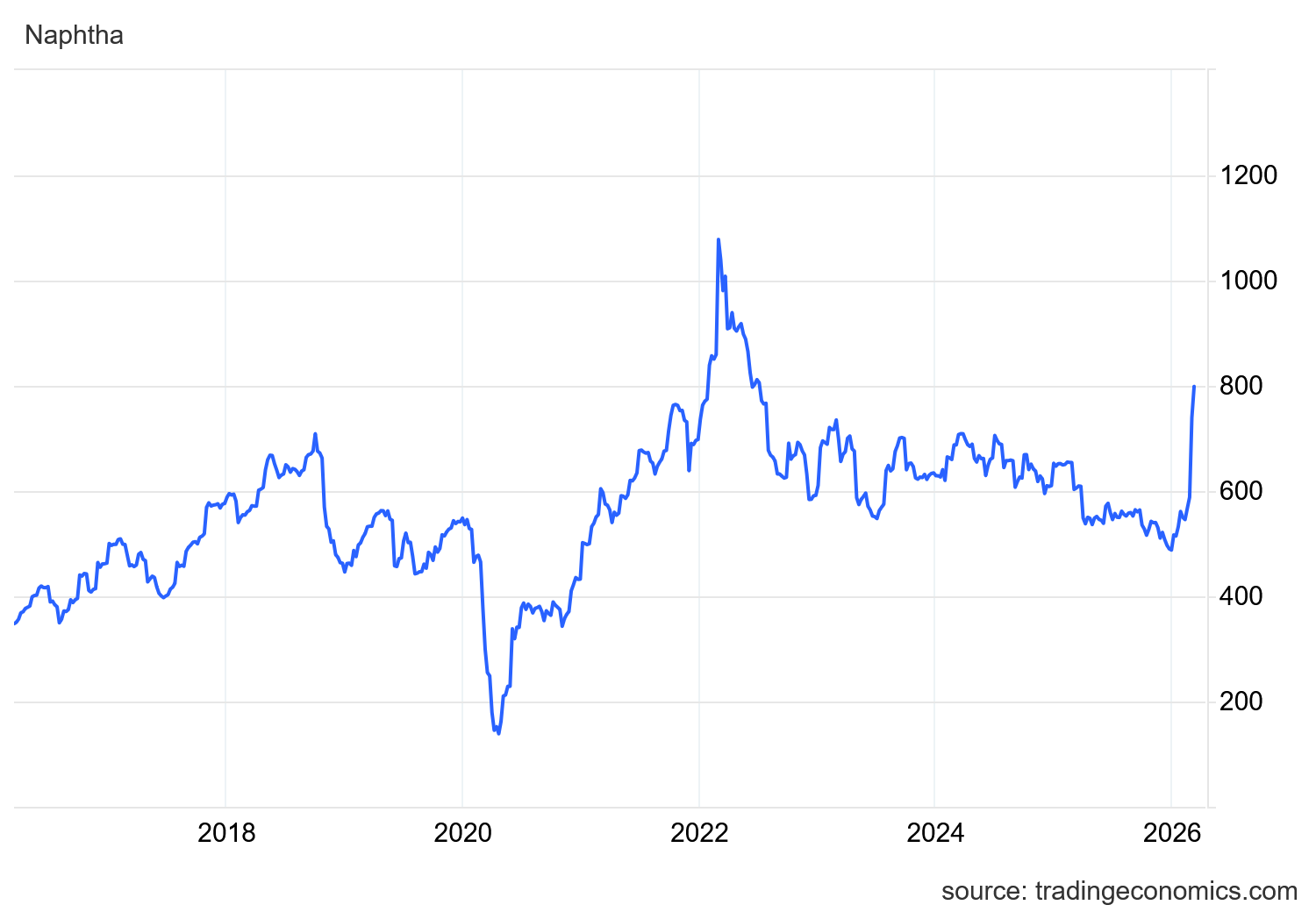
During the first quarter of 2022, global naphtha prices traded roughly between $800 and $1,070 per ton. This was one of the most volatile periods for feedstocks in the last decade, driven by supply disruptions, strong energy markets, and post-pandemic demand recovery.
Source: TRADING ECONOMICS
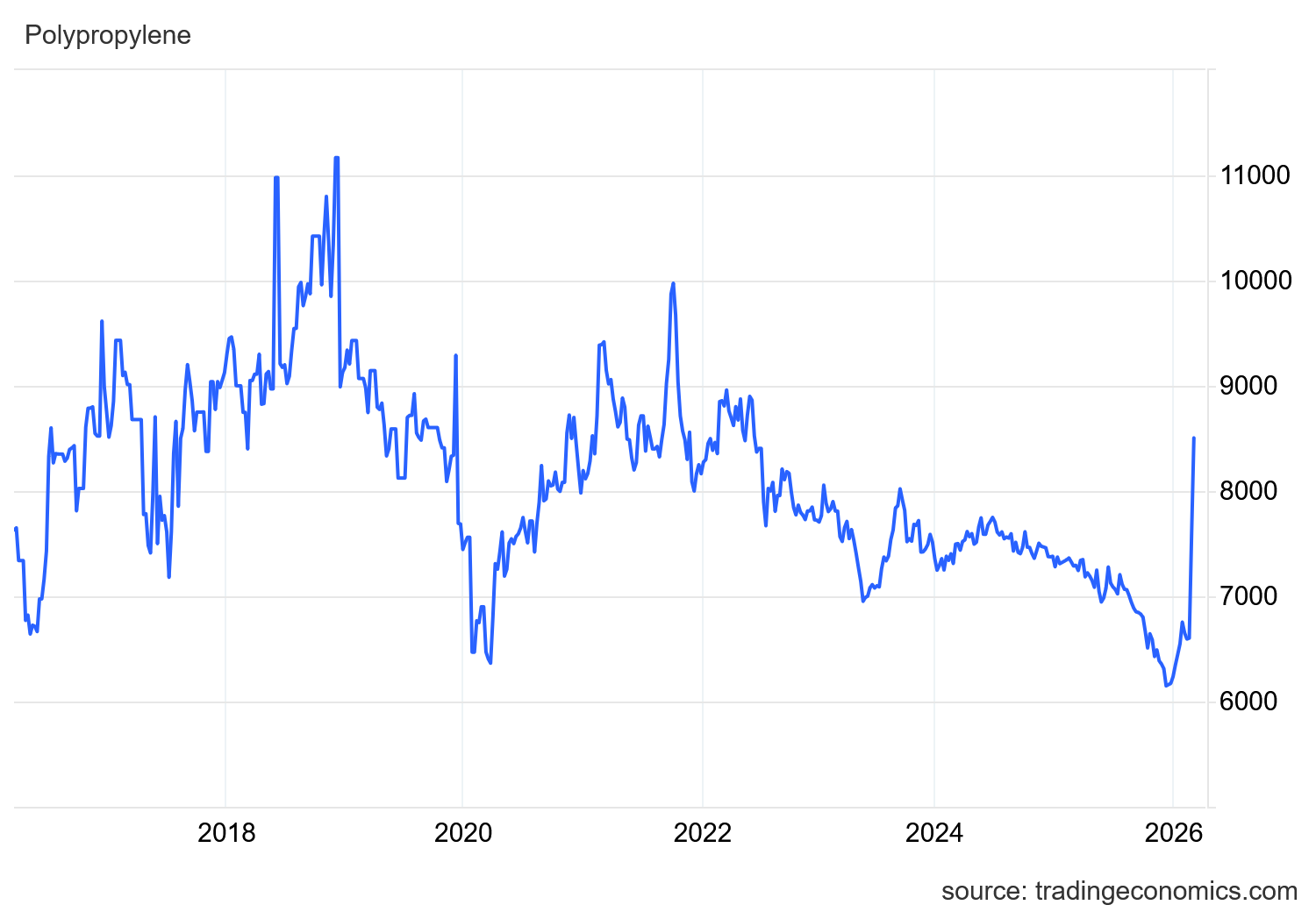
What makes this period particularly relevant today is that polypropylene prices were not dramatically higher than current levels. In China, polypropylene traded around 8,500–8,800 CNY per ton, which is remarkably close to the ~8,550 CNY/T levels observed today.
Source: TRADING ECONOMICS
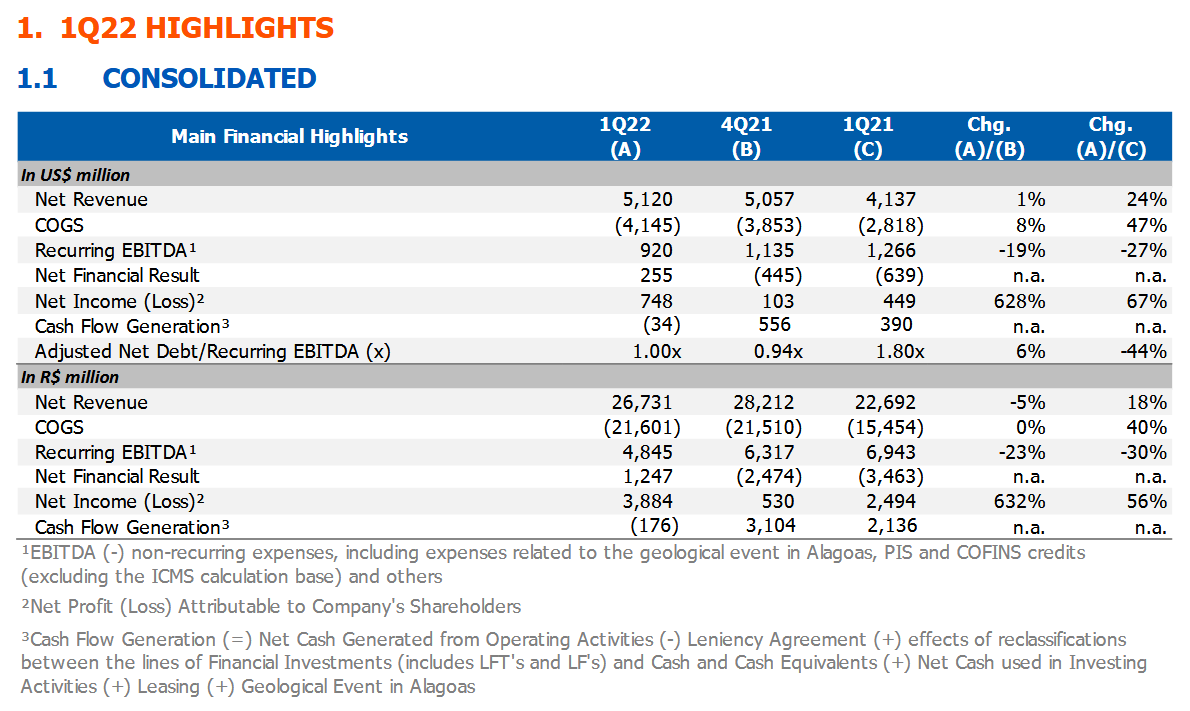
Despite the significantly higher feedstock costs at that time, Braskem generated strong profitability. In the first quarter of 2022, the company reported net income of $748 million.
Source: Braskem
This historical comparison highlights an important structural point about Braskem’s business model.
Although the company is still partially exposed to naphtha-based production, its dependence on this feedstock has been steadily declining for more than a decade.
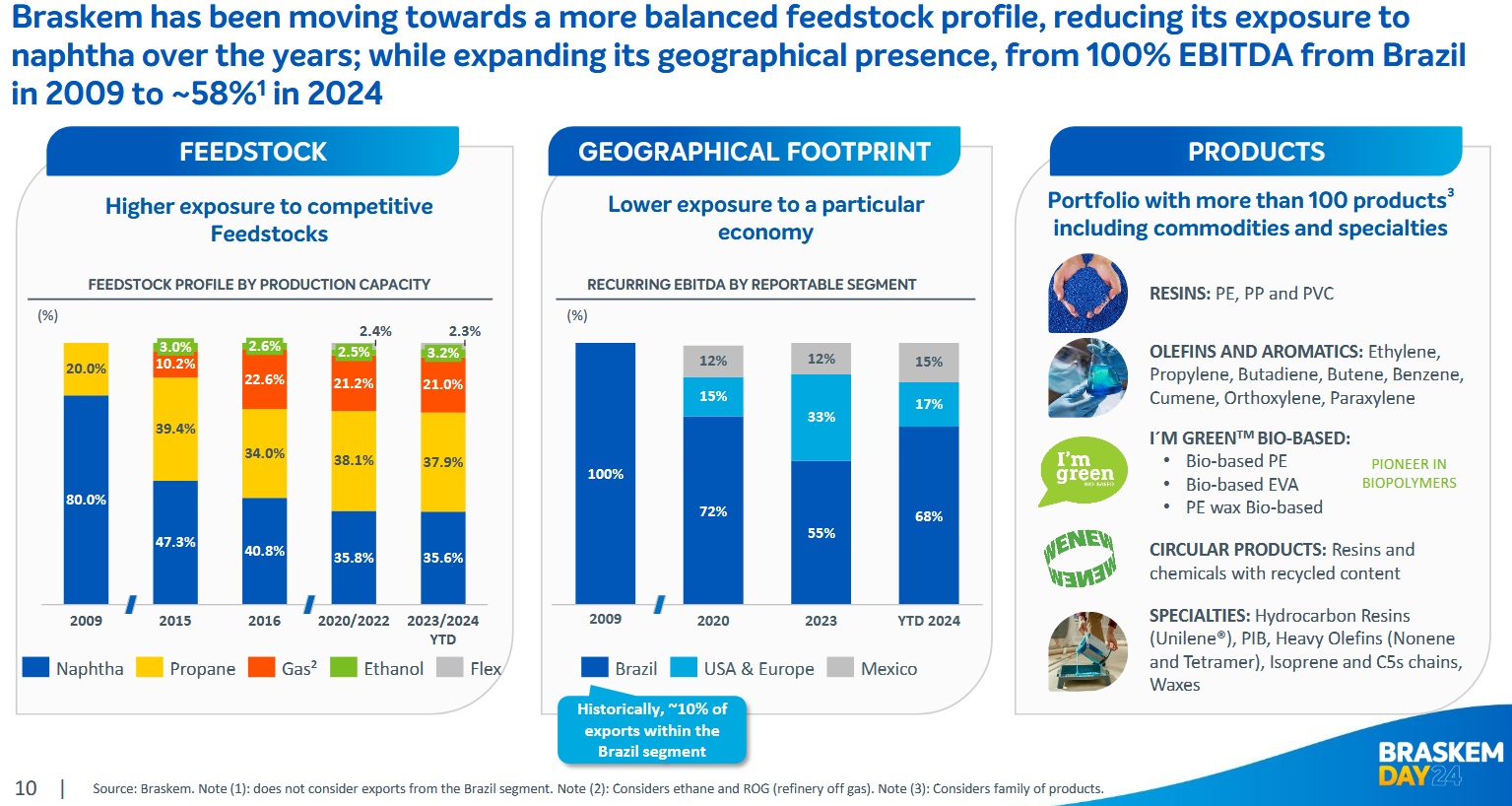
Since 2009, Braskem has been quietly executing a structural shift in its feedstock mix. At that time, roughly 80% of its production capacity relied on naphtha. Over the years, the company invested heavily in diversification, including ethane-based production in North America and gas-based assets in Brazil.
As a result, naphtha exposure has been reduced to roughly the mid-30% range today.
Source: Braskem
In other words, today’s polymer prices are already comparable to levels seen during a period when feedstock costs were significantly higher — and when Braskem was generating hundreds of millions of dollars in quarterly profit.